
Visualizing the Nervous System: An AI Anatomy Study Guide
Master the nervous system with visual learning strategies and AI-powered study tools. From neurons to brain anatomy, build lasting understanding for exams.
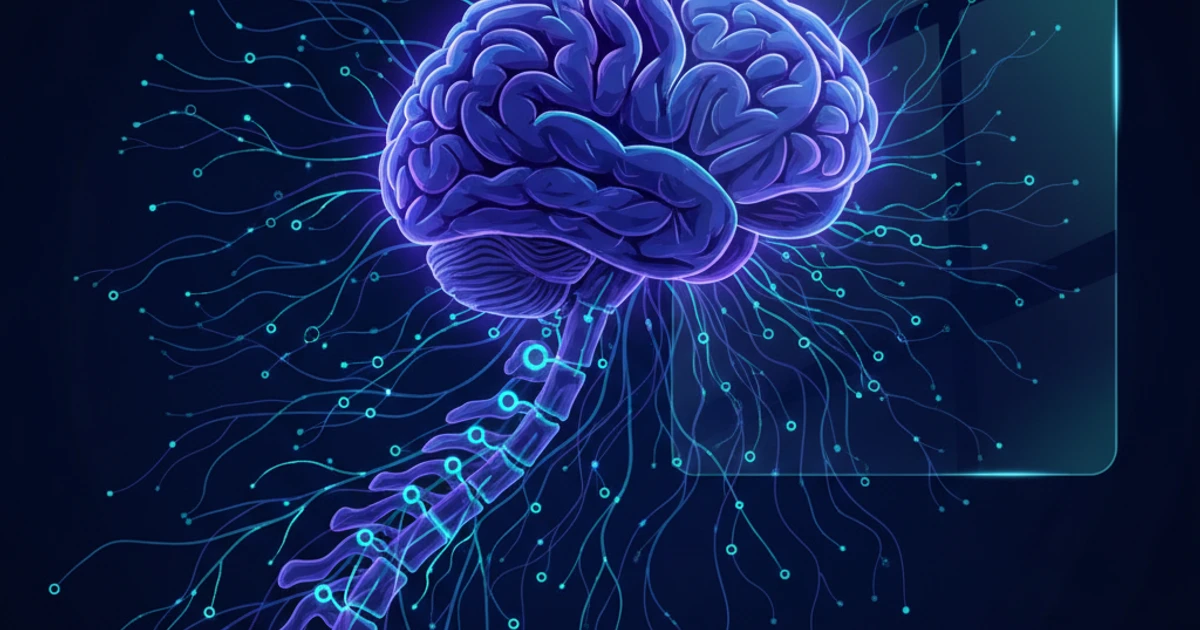
Try ScreenHelp Free
Get AI-powered screen assistance for any task. Analyze screenshots and get instant guidance.
Get StartedWhy the Nervous System Is One of the Hardest Topics in Anatomy
Ask any anatomy student which body system gave them the most trouble, and the nervous system will almost always make the top three. It's not hard to see why: the nervous system involves hundreds of named structures, intricate pathways that cross and recross the midline, functional relationships that aren't always intuitive, and terminology that can feel like learning a second language.
The central challenge is that the nervous system is inherently three-dimensional and interconnected. A nerve doesn't just exist in isolation — it originates from a specific nucleus, travels through named foramina, and innervates particular structures. Understanding it requires spatial reasoning, and that means visual learning isn't just helpful — it's essential.
This guide breaks down the nervous system into manageable sections, shares proven visual study strategies, and explains how modern AI tools can accelerate your comprehension when you're staring at a complex diagram and need clarity.
A Structural Overview: Organizing What You Need to Know
Before diving into study strategies, let's establish the framework. The nervous system is divided into two major components:
Central Nervous System (CNS)
- Brain: Cerebrum, cerebellum, brainstem (midbrain, pons, medulla oblongata)
- Spinal cord: 31 segments (8 cervical, 12 thoracic, 5 lumbar, 5 sacral, 1 coccygeal)
Peripheral Nervous System (PNS)
- Cranial nerves: 12 pairs originating from the brain/brainstem
- Spinal nerves: 31 pairs exiting the spinal cord
- Autonomic nervous system: Sympathetic and parasympathetic divisions
- Enteric nervous system: The "second brain" governing the GI tract
Organizing your study sessions around these divisions — rather than trying to learn everything at once — is the first step toward retention.
The Neuron: Start at the Cellular Level
Every nervous system topic builds on the neuron, so make sure your foundation is solid.
Key structures to visualize:
- Cell body (soma) — contains the nucleus; the metabolic center
- Dendrites — receive incoming signals; branch extensively
- Axon — transmits signals away from the cell body
- Myelin sheath — insulating layer (Schwann cells in PNS, oligodendrocytes in CNS)
- Nodes of Ranvier — gaps in myelin enabling saltatory conduction
- Axon terminals (synaptic boutons) — release neurotransmitters at synapses
Study tip: Draw neurons from memory repeatedly. Start with a simple sketch, then add detail with each iteration. Compare your drawing against textbook diagrams to find gaps in your mental model.
Brain Anatomy: A Region-by-Region Approach
The brain is where most students feel overwhelmed. Breaking it into regions and associating each with key functions makes it manageable.
Cerebral Cortex — The Four Lobes
| Lobe | Location | Key Functions |
|---|---|---|
| Frontal | Anterior, behind the forehead | Motor control, planning, decision-making, Broca's area (speech production) |
| Parietal | Superior-posterior to frontal | Somatosensory processing, spatial awareness |
| Temporal | Lateral, near the ears | Auditory processing, memory (hippocampus), Wernicke's area (language comprehension) |
| Occipital | Posterior | Visual processing |
Deeper Structures Worth Memorizing
- Thalamus — Sensory relay station (everything except olfaction)
- Hypothalamus — Homeostasis, hormone regulation, autonomic control
- Basal ganglia — Motor coordination, habit formation
- Hippocampus — Memory consolidation (short-term → long-term)
- Amygdala — Emotional processing, especially fear
- Corpus callosum — White matter connecting left and right hemispheres
Visual strategy: Use color-coded brain maps. Assign a color to each lobe and its associated structures. When reviewing cross-sectional images (axial, sagittal, coronal), mentally "paint" each region to reinforce spatial relationships.
The 12 Cranial Nerves: Mnemonics Meet Visual Maps
The cranial nerves are a classic exam topic. You need to know their names, numbers, functions (sensory, motor, or both), and exit points from the skull.
The classic mnemonic: Oh, Oh, Oh, To Touch And Feel Very Good Velvet, AH!
| Number | Name | Type | Key Function |
|---|---|---|---|
| I | Olfactory | Sensory | Smell |
| II | Optic | Sensory | Vision |
| III | Oculomotor | Motor | Eye movement, pupil constriction |
| IV | Trochlear | Motor | Superior oblique eye movement |
| V | Trigeminal | Both | Facial sensation, mastication |
| VI | Abducens | Motor | Lateral rectus eye movement |
| VII | Facial | Both | Facial expression, taste (anterior 2/3 tongue) |
| VIII | Vestibulocochlear | Sensory | Hearing, balance |
| IX | Glossopharyngeal | Both | Taste (posterior 1/3 tongue), swallowing |
| X | Vagus | Both | Parasympathetic to thoracic/abdominal viscera |
| XI | Accessory | Motor | Trapezius, sternocleidomastoid |
| XII | Hypoglossal | Motor | Tongue movement |
Pro tip: Don't just memorize the table. Find a diagram showing the brainstem from below and trace where each nerve exits. Understanding the spatial arrangement — olfactory and optic are cerebral, III-IV from the midbrain, V from the pons, VI-VIII from the pontomedullary junction, IX-XII from the medulla — makes clinical scenarios far more intuitive.
Spinal Cord and Reflex Arcs
The spinal cord is deceptively complex. In cross-section, you'll need to identify:
- Gray matter: Dorsal (posterior) horns for sensory processing, ventral (anterior) horns for motor neurons
- White matter: Ascending tracts (sensory) and descending tracts (motor)
- Central canal: Contains cerebrospinal fluid
Key Tracts to Know
Ascending (sensory):
- Dorsal columns (fasciculus gracilis & cuneatus) — Fine touch, proprioception, vibration
- Spinothalamic tract — Pain and temperature
Descending (motor):
- Corticospinal (pyramidal) tract — Voluntary movement
- Extrapyramidal tracts — Posture, balance, coordination
Where they cross matters. The dorsal columns decussate (cross) in the medulla, while the spinothalamic tract crosses at the spinal level. This is why specific injuries produce different patterns of sensory loss — a concept frequently tested in exams.
The Autonomic Nervous System: Sympathetic vs. Parasympathetic
This is another area where visual comparison charts are invaluable.
| Feature | Sympathetic | Parasympathetic |
|---|---|---|
| Nickname | "Fight or flight" | "Rest and digest" |
| Origin | Thoracolumbar (T1-L2) | Craniosacral (CN III, VII, IX, X + S2-S4) |
| Preganglionic fibers | Short | Long |
| Postganglionic fibers | Long | Short |
| Neurotransmitter (post) | Norepinephrine | Acetylcholine |
| Heart rate | Increases | Decreases |
| Pupils | Dilates | Constricts |
| Digestion | Inhibits | Stimulates |
Study strategy: Create a two-column comparison sheet and fill it out from memory. Then look at a diagram showing the sympathetic chain ganglia alongside the vagus nerve distribution. Seeing the anatomical basis for "thoracolumbar" vs. "craniosacral" makes the distinction stick.
Five Visual Study Techniques That Actually Work
1. Active Drawing Over Passive Reviewing
Research consistently shows that drawing anatomical structures from memory — even poorly — improves recall far more than re-reading textbook illustrations. Sketch the brain, label the lobes, draw the cranial nerves emerging from the brainstem. Check your work. Repeat.
2. Layered Diagrams
Start with a blank outline and add one system at a time. For example, begin with the brain's surface anatomy, then overlay the major arteries (Circle of Willis), then add the cranial nerve exit points. Each layer reinforces spatial relationships.
3. Cross-Sectional Analysis
Real anatomy exams — and clinical practice — require identifying structures in cross-section. Practice with axial MRI and CT images. Start by identifying the largest landmarks (ventricles, falx cerebri, cerebellum), then work toward smaller structures.
4. Pathway Tracing
For neural pathways (like the corticospinal tract or pain pathway), trace the entire route from origin to destination. Where does the neuron start? Where does it synapse? Where does it cross? Where does it terminate? Sketching these pathways as flowcharts can clarify complex multi-neuron circuits.
5. AI-Assisted Diagram Review
When you encounter a complex anatomical diagram or a labeled image you can't fully decipher, AI tools with visual capabilities can offer instant explanations. This is where a tool like ScreenHelp becomes particularly useful: share your screen while studying an online anatomy atlas or digital flashcard, trigger a capture when you're stuck on a specific structure, and get an AI-generated explanation that identifies what you're looking at and describes its function.
ScreenHelp works as an on-screen AI assistant — it sees what's on your screen and responds to your questions in real time. You can set up custom prompts tailored to anatomy study, such as "Identify all labeled structures and explain their functions" or "Explain the clinical significance of this structure." Responses stream directly to your browser or mobile device via QR code, so you can study comfortably at your desk or on the go.
Practice Questions: Test Your Understanding
Use these to check whether your visual study sessions are translating into exam-ready knowledge:
-
A patient cannot shrug their shoulders after a neck surgery. Which cranial nerve was likely damaged?
- Answer: CN XI (Accessory nerve) — innervates the trapezius
-
A lesion in the left motor cortex would cause weakness in which side of the body?
- Answer: The right side — the corticospinal tract decussates in the medulla
-
Which structure connects the two cerebral hemispheres and allows communication between them?
- Answer: Corpus callosum
-
A patient has lost pain and temperature sensation on one side of the body. Where in the spinal cord might the lesion be?
- Answer: The contralateral spinothalamic tract (since it crosses at the spinal cord level)
-
Which division of the autonomic nervous system uses the vagus nerve as its primary pathway?
- Answer: Parasympathetic division
If you're practicing with digital question banks or online quizzes, an AI screen assistant can help you break down explanations for questions you get wrong — identifying the anatomical reasoning behind each answer rather than just giving you the correct letter.
Building a Study Schedule for Nervous System Anatomy
For a typical 2-3 week anatomy exam prep period:
- Week 1: Neuron structure, CNS overview, brain lobes and deep structures. Focus on drawing and labeling.
- Week 2: Cranial nerves, spinal cord tracts, reflex arcs. Use pathway tracing and mnemonics.
- Week 3: Autonomic nervous system, integration and clinical correlations. Practice with cross-sectional images and case-based questions.
Allocate at least 30% of each session to active recall — practice questions, blank-diagram labeling, and self-testing. Passive review alone won't build the deep understanding anatomy exams demand.
Final Thoughts
The nervous system rewards students who think visually and study actively. Mnemonics get you started, but true comprehension comes from understanding spatial relationships, tracing pathways, and repeatedly testing yourself with diagrams and clinical scenarios.
When you hit a wall — a confusing MRI cross-section, an unlabeled diagram, a practice question with an explanation that doesn't quite click — having an AI tool that can see exactly what you're looking at and explain it in context can save significant time. That combination of disciplined study technique and intelligent assistance is what turns a daunting topic into a manageable one.
Start Using AI Screen Assistance Today
Join thousands of users who are already working smarter with ScreenHelp.
Related Articles
Visual Learning for Board Exams: How to Cram Effectively
Master board exam prep with proven visual learning strategies. Learn how to cram effectively using active recall, visual aids, and AI-powered screen tools.
Read article
The Secret Weapon for Passing Insurance Licensing Tests in 2025
Struggling with insurance licensing exam prep? Discover proven study strategies and AI-powered tools that help you master complex insurance concepts faster.
Read article
Learning Data Structures? Visualize Algorithms with AI
Struggling with data structures and algorithms? Learn how to use visualization techniques and AI-powered tools to finally understand trees, graphs, sorting, and more.
Read article