
Mastering Physiology: How AI Vision Simplifies Complex Systems
Struggling with physiology diagrams and feedback loops? Learn how AI screen assistants can break down complex body systems and accelerate your understanding.
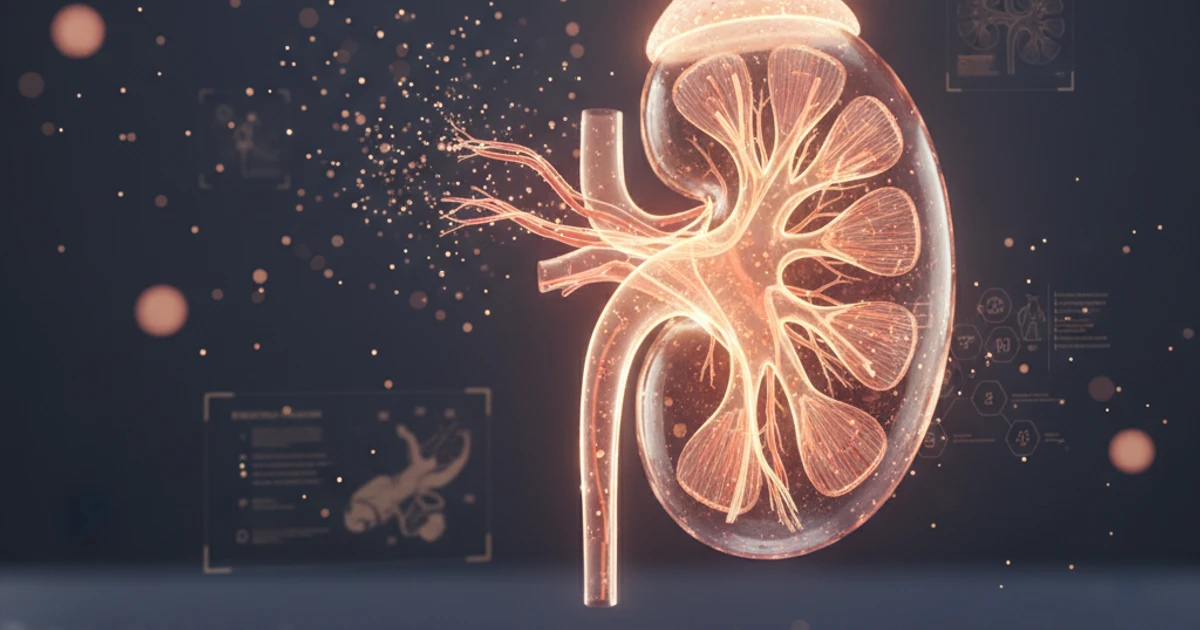
Try ScreenHelp Free
Get AI-powered screen assistance for any task. Analyze screenshots and get instant guidance.
Get StartedPhysiology is one of those subjects that separates casual science students from dedicated ones. It's not just about memorizing parts of the body — it's about understanding how those parts work together in intricate, dynamic systems. From the cascade of events in cardiac action potentials to the hormonal feedback loops of the endocrine system, physiology demands a kind of systems-level thinking that textbooks alone don't always nurture.
So how do you actually get better at it? And where can modern AI tools genuinely help? Let's dig in.
Why Physiology Feels So Hard
Most students hit a wall with physiology not because they lack intelligence, but because the subject requires you to hold multiple moving pieces in your head simultaneously. Consider what happens when you study the renin-angiotensin-aldosterone system (RAAS):
- Blood pressure drops
- Juxtaglomerular cells in the kidney detect reduced perfusion
- Renin is released, converting angiotensinogen to angiotensin I
- ACE in the lungs converts angiotensin I to angiotensin II
- Angiotensin II triggers vasoconstriction AND aldosterone release
- Aldosterone promotes sodium and water retention in the kidneys
- Blood pressure rises, completing the feedback loop
That's seven steps involving three organs and multiple molecules — for a single regulatory mechanism. Now multiply that by every system in the body. The challenge isn't any single concept; it's the interconnectedness of everything.
Effective Study Strategies for Physiology
Before we talk about AI tools, let's establish what actually works when studying physiology:
1. Draw It Out
Physiology is inherently visual. Flow charts, diagrams, and concept maps force you to articulate relationships between components. If you can draw the cardiac cycle from memory — including pressure changes, valve events, and the ECG correlation — you understand it at a deep level.
2. Explain It to Someone (or Something)
The Feynman technique is particularly powerful for physiology. Pick a process, like oxygen transport in the blood, and try to explain it in plain language. Where you stumble is exactly where your understanding breaks down.
3. Focus on "Why," Not Just "What"
Knowing that ADH increases water reabsorption is rote memorization. Understanding why — that ADH inserts aquaporin-2 channels in the collecting duct, creating an osmotic gradient that pulls water back into the hyperosmotic medullary interstitium — is actual comprehension. Exams at the university level absolutely test the "why."
4. Use Practice Questions Relentlessly
Physiology exams, from undergraduate finals to USMLE Step 1, are notorious for clinical vignettes that require you to apply concepts. Passive re-reading won't prepare you for a question that describes a patient's symptoms and asks which ion channel is likely dysfunctional.
Where AI Screen Assistance Fits In
Here's where things get interesting for modern students. A huge part of studying physiology involves staring at complex diagrams, graphs, and clinical scenarios on your screen — whether in a digital textbook, a lecture recording, or an online practice quiz — and thinking, "I don't understand what I'm looking at."
This is precisely the kind of problem that an AI screen assistant can help solve.
Tools like ScreenHelp use AI vision to analyze what's on your screen and provide explanations in real time. Instead of switching tabs to search for context or scrolling through forums hoping someone asked the same question, you can get an instant breakdown of whatever's in front of you.
Some practical scenarios:
- A Guyton pressure-flow diagram you can't decipher: Share your screen and ask the AI to explain the axes, curves, and physiological significance.
- A Wiggers diagram in your cardiology lecture: Get a step-by-step walkthrough of each phase and how the pressure tracings relate to heart sounds.
- A practice exam question about acid-base balance: Have the AI explain the Henderson-Hasselbalch application and walk through the compensatory mechanisms.
- A nephron diagram with transport proteins: Ask which are active vs. passive, and why each matters clinically.
The key advantage of an AI that sees your screen versus a standard chatbot is context. You don't have to describe the diagram in words — it sees exactly what you see and can reference specific elements directly.
Breaking Down the Hardest Physiology Topics
Let's briefly address some of the topics that trip up the most students, and how to approach each:
Cardiac Electrophysiology
The action potentials of cardiac myocytes (especially the pacemaker cells vs. contractile cells) confuse students because the ion channels behave differently than in neurons. Focus on the funny channels (If) in the SA node and understand why there's no true resting potential in pacemaker cells — they're designed to fire spontaneously.
Pulmonary Mechanics
Compliance, elastance, surfactant, and the pressure-volume relationship of the lungs. The key insight most students miss: the lung wants to collapse, and the chest wall wants to spring outward. At FRC (functional residual capacity), these opposing forces are balanced.
Renal Physiology
Arguably the most complex organ system to study. The countercurrent multiplier is the concept that separates those who memorize from those who understand. Tip: trace a single molecule of NaCl through the loop of Henle and follow what happens at each segment.
Endocrine Feedback Loops
The hypothalamic-pituitary axes (HPA, HPT, HPG) all follow a similar template, but the details differ. Learning the template first makes the specifics much easier to absorb. Then focus on what happens when you remove one level — that's how most exam questions are structured.
Using AI to Build Understanding, Not Bypass It
A critical distinction: the goal of using an AI screen assistant for physiology should be to build deeper understanding, not to shortcut the learning process. Here's how to use it well:
- Attempt the problem first. Whether it's a practice question or a diagram, give it a genuine effort before asking for help.
- Ask "why" follow-ups. If the AI explains that a patient's potassium is elevated, ask why that happens in the context of metabolic acidosis. Push deeper.
- Use it to check your mental models. Draw your own version of a feedback loop, then have the AI review what's on your screen and point out errors or omissions.
- Set up custom prompts. With ScreenHelp, you can create predefined prompts tailored to your study style — for example, one that always asks the AI to explain clinical significance alongside the basic mechanism.
This approach turns AI from a crutch into a tutor — one that's available at 2 AM when you're grinding through renal physiology for the third time.
The Mobile Advantage
One underrated study workflow: use ScreenHelp's QR code feature to stream AI responses to your phone while studying on your laptop. This way, your laptop screen stays fully dedicated to your lecture slides or digital textbook, while explanations appear on your phone beside you. It mimics having a study partner who's reading over your shoulder and whispering clarifications.
Final Thoughts
Physiology rewards the student who goes beyond memorization and pursues genuine understanding of biological systems. The good news is that today's tools — from spaced repetition apps to AI screen assistants — make that deeper learning more accessible than ever.
The complexity of physiology isn't going anywhere. But with the right strategies and smart use of technology, you can build the kind of systems-level thinking that makes even the toughest topics click. Whether you're preparing for your first physiology midterm or studying for board exams, the combination of active learning and AI-assisted explanation is a powerful one.
Start Using AI Screen Assistance Today
Join thousands of users who are already working smarter with ScreenHelp.
Related Articles
Cell Biology Explained: Analyze Diagrams on Your Screen with AI
Struggling with complex cell biology diagrams? Learn key structures, functions, and how AI screen assistants can help you study organelles and processes faster.
Read article
Physics Homework: Analyzing Free Body Diagrams with AI
Struggling with free body diagrams? Learn how to identify forces, resolve components, and use AI screen assistance to check your physics homework step by step.
Read article
Analyze Poetry and Literature Themes Visually with AI Screen Assistance
Struggling with poetry analysis or literature themes? Learn how visual approaches and AI screen assistants can deepen your understanding of complex literary texts.
Read article